Home Blog Page 2

The Biggest ‘Nation’ at the 2026 World Cup Is a Club — But Which One?

The biggest “nation” at the World Cup isn’t a nation at all — it’s a club. But which club tops the World Cup 2026 club representation table depends entirely on how you count. Angle inspired by BBC Sport’s Opta-powered squads-in-numbers breakdown.

The most revealing table of the World Cup 2026 club representation race is also the most slippery. Depending on which column you trust, the planet’s most-represented club this summer is either Manchester City or Bayern Munich. Both answers are defensible, and the gap between them is a small lesson in how football statistics are built.

Start with the registration snapshot. When FIFA’s final squads landed on 2 June, the Opta count circulated by BBC Sport put City top of all 452 contributing clubs with 19 players spread across 12 national teams, ahead of Bayern, with Arsenal and Champions League winners Paris Saint-Germain tied on 16 and Barcelona on 15. It was widely billed as a club record, and on that methodology City do lead the world.

Then read City’s own scorecard. On the eve of kick-off the club’s website counted 17 players across 12 nations and conceded that “only German champions Bayern Munich have a larger representation” among active squads. The discrepancy is not an error so much as a definition: the registration count sweeps in contracted and provisionally listed names, while the active-squad count tallies only the players actually travelling. Pick the first and City sit top; pick the second and Bayern do.

What is not in dispute is the colour of the tournament. More than 180 Premier League players are involved, the most the competition has ever sent, with every current top-flight club contributing at least one. The English league also supplies the largest share of any of the “Big Five”, around 162 players, comfortably clear of Germany in second. City’s contingent alone reads like a draw preview: James Trafford, Marc Guéhi and Nico O’Reilly for England, plus Rodri for Spain and Rayan Cherki for France, alongside Erling Haaland for Norway, Bernardo Silva for Portugal and Omar Marmoush for Egypt.

Below the giants, the table doubles as a map of who actually qualified. Conference League winners Crystal Palace sent 12 players, level with Atletico Madrid and Manchester United, while Saudi Arabia’s Al-Hilal match that figure as the best-represented club outside Europe. The most instructive entry, though, is Inter Milan’s mere seven. The reigning Serie A champions are dragged down almost entirely because Italy failed to reach the finals at all. Club wealth cannot override a missing nation: City’s own £26m goalkeeper Gianluigi Donnarumma spends the summer at home for exactly that reason. There is even a neat irony in the top order, since the season’s actual Premier League champions, Arsenal, sent fewer players than the City side that finished four points behind them.

Behind the spectacle runs a quieter financial machine, and here too the popular figure is wrong. Plenty of outlets repeat a rate of roughly $10,950 per player per day, but that was the Qatar 2022 number. For 2026, FIFA’s own Club Benefits Programme sets a minimum of around $5,000 per player per day from a record $355m pot, up almost 70 percent on the $209m paid after Qatar. The daily rate actually fell; the total rose because, for the first time, clubs are paid for releasing players to qualifiers too, with $100m ring-fenced for qualifying and $250m for the finals. A club whose players run deep into July stands to bank a meaningful slice.

So when the group stage opens, watch the flags by all means. But the quieter contest, the one over which club’s academy and wage bill have quietly colonised the international game, has two leaders this summer, separated only by a column heading. An English club tops one count and a German club the other — and either way, a thread of sky blue runs through nearly every group.

Sources: Manchester City, Premier League, BBC Sport / Opta via ModernGhana, BeSoccer, Football Italia, Premier League (Arsenal title), FIFA, Bolavip.

Sixteen Years to the Day — Mexico vs South Africa, the World Cup Opener That Came Back Around

Mexico vs South Africa kicks off the 2026 World Cup at the Estadio Azteca on 11 June — and almost to the detail, it is a replay of the fixture that opened South Africa 2010, a coincidence first laid out in WorldCupPass’s opening-ceremony breakdown that runs far deeper than the result.

The draw was unsentimental about it. Mexico open the tournament against South Africa at the Azteca in Mexico City, the first of their Group A matches alongside South Korea and Czechia. What the bracket quietly produced is unprecedented: the first repeat opening-match pairing in World Cup history — and it lands exactly sixteen years to the day after these same two sides kicked off South Africa 2010.

That night at Soccer City in Johannesburg, Siphiwe Tshabalala lashed in the tournament’s first goal with a left foot the whole continent felt, before Rafael Marquez rescued a 1-1 draw eleven minutes from time. The man in the Mexico dugout was Javier Aguirre.

He is in the dugout again. Aguirre returned for a third stint in July 2024, and in a twist no scriptwriter would risk, the player who scored that 2010 equaliser now sits beside him: Rafael Marquez is his lead assistant. The manager and the goalscorer from the last time these teams opened a World Cup, reunited on the same bench, facing the same opponent.

For the man they call El Vasco, the Azteca carries even more. He played a World Cup quarter-final on that pitch in 1986, losing on penalties to West Germany and becoming the first Mexican ever sent off at a World Cup. Forty years later he opens a tournament on the same turf — a stadium that this summer becomes the first venue to host three World Cup opening matches.

For South Africa, the symmetry cuts the other way. 2010 ended with Bafana Bafana becoming the first host nation eliminated in the group stage of a single-group-stage World Cup, and they have not been back since — a sixteen-year exile that, unlike Iraq’s far longer one, ends against the very side they faced that opening night. They arrive young and unfancied under Hugo Broos, but not without bite: they topped a qualifying group containing Nigeria to get here.

Mexico carry the heavier load. For all the Azteca’s ghosts, El Tri have never gone beyond a World Cup quarter-final, were knocked out in the round of 16 at every tournament from 1994 to 2018, then fell at the group stage in 2022 for the first time since 1978. Aguirre’s own two World Cups in charge both ended in the last sixteen — in 2010, fittingly, to Argentina. This time he arrives with a Nations League and a Gold Cup from 2025, and a country that, on home soil, expects more than another familiar goodbye.

So the fixture that looks like a rerun is really a reckoning. A manager chasing the quarter-final that has escaped him as player and coach. A goalscorer turned lieutenant. Two nations meeting at the start line a second time, sixteen years and an ocean apart, in the cathedral where the World Cup keeps coming home. The whistle on 11 June will sound a lot like 2010 — but nobody in gold will want it to end the same way.

Sources: WorldCupPass, MLSsoccer, FIFA / Group A records, Sports Illustrated, Goal, Al Jazeera, FOX Sports, Reuters / Soccerway, World Cup Wiki, ESPN, beIN Sports, CONCACAF Nations League 2025.

Forty Years and a Concrete Ball — Iraq’s Long Walk Back to the World Cup

The Iraq World Cup 2026 story will be filed under football: a drought, an underdog, a feel-good comeback after four decades away. But the silence was authored by a regime, not by the game — a truth that VAVEL’s pre-tournament preview only began to surface. This is the longer road back.

On 16 June, in Boston, Iraq will line up against Norway and end the longest exile of any nation at the 2026 World Cup. It will be their first appearance at the finals since Mexico 1986 — forty years, an entire generation, between one tournament and the next.

The record from that single previous appearance is brutally thin. Iraq lost all three group games — to hosts Mexico, to Paraguay, and to a Belgium side that would finish fourth — and scored exactly one goal, struck by Ahmed Radhi against the Belgians. One goal in forty years of World Cup football. The number invites a question the football pages rarely ask: where did the four decades go?

A team that trained with concrete

The answer is not about form. For much of the gap, Iraqi football was the private cruelty of one man. Uday Hussein, Saddam’s eldest son, ran the country’s Olympic committee and, through it, held Iraqi football in his grip, and he treated the national team as an instrument of his moods. Players who lost could be caned across the soles of their feet so the pain left no visible marks; some were imprisoned, others had their heads shaved as public humiliation. After Iraq failed to reach the 1994 World Cup, defectors later testified, jailed players were made to kick a ball cast from concrete.

The fear warped the football itself. A team that should have built on its 1986 debut was instead broken in private, season by season, behind the walls of its own federation.

The wars came next

When Uday was killed in 2003, the regime’s grip ended — but the country’s footing did not steady. Sanctions, the 2003 invasion, and the insurgency that followed kept Iraqi football improvising in exile, frequently unable to play its home games on home soil. And yet the single brightest moment of the whole forty years arrived in the worst of it: in 2007, with sectarian violence at its peak, Iraq won the Asian Cup, a victory that briefly stopped a country from tearing at itself. It was proof of what the team could be when it was simply allowed to play.

Arnold, and the symmetry

Getting back took a foreigner and a long memory. After Jesús Casas was dismissed with qualification slipping away, Iraq turned in May 2025 to Graham Arnold, the Australian who had taken his own country to the 2022 World Cup in Qatar. There is a quiet symmetry in the hire: the last time Iraq played a World Cup, in 1986, Arnold was a striker in Sydney, good enough to be named his league’s player of the season. He has been circling this stage, in one role or another, for the entire length of Iraq’s absence.

The qualification he oversaw was its own ordeal — twenty-one matches across more than two years, ending in an inter-continental playoff in Mexico. Regional conflict turned even the travel into a trial: amid the fallout of strikes on Iran, the squad reached Mexico barely a week before the decisive game on a charter flight, and Arnold handed his exhausted players three days off simply to recover from the journey. They beat Bolivia 2-1 on 31 March — Ali al-Hamadi opening the scoring, Aymen Hussein settling it after the break — to become the forty-eighth and final team into the tournament.

What they carry to America

The reward is unforgiving. Iraq landed in Group I alongside France — among the favourites — Norway and Senegal, and will chase what would be, remarkably, their first-ever World Cup finals win. Their hopes lean on the striker Mohanad Ali, whose goal tally is still climbing toward the records of the great Hussein Saeed, and on Ali al-Hamadi, the Ipswich Town forward who spent last season on loan at Luton Town.

Iraq are not the only improbable name on this expanded 48-team bracket. Curaçao’s own unlikely arrival is its own story of a small nation gatecrashing the biggest stage.

But the scoreline in Boston may be the least of it. For a team whose recent history was written in prison cells and concrete, the act of walking out at a World Cup at all — freely, unafraid — outstrips whatever the result turns out to be. Forty years ago they arrived terrified. This time, they arrive simply as a team.

Sources: Al Jazeera; Yahoo Sports / FourFourTwo; VAVEL; ESPN; These Football Times; Dawan; Olympics.com; Ipswich Town FC.

Everyone’s Already Written the Goodbye — Messi, Modrić and Ronaldo Are Too Busy Chasing the Cup

When Manchester City’s Rúben Dias was asked whether the 2026 World Cup would be the final act for Lionel Messi, Luka Modrić and Cristiano Ronaldo, he answered with two words: “Let’s see.” Football has spent months rehearsing a farewell tour. The three men it keeps eulogising never quite agreed to play the part.

There is a story the sport has decided to tell itself about this summer, and it is a beautiful one. Three of the greatest players who ever lived — sharing fourteen Ballon d’Or awards between them — walking out one last time across the United States, Canada and Mexico before the lights go down for good. It is a tidy narrative. It is also, on closer inspection, three completely different stories wearing one borrowed costume.

The eulogy got there first. That is the curious thing about greatness in its final stretch: it becomes visible to us in a way it never was at its peak, precisely because we are watching for the ending. But a script written for the crowd is not the same as a decision made by the men in the boots — and a closer look at what Messi, Modrić and Ronaldo have actually said reveals a goodbye that refuses to stay choreographed.

Ronaldo signed his name — to a different document

Start with the one who has, in fact, confirmed it. In November 2025, Cristiano Ronaldo told a Saudi investment summit that the 2026 tournament would be his last on football’s biggest stage — “Definitely, yes, because I will be 41,” he said. So the captain of Portugal has, alone among the three, put his name to the farewell.

But read the small print. Ronaldo, now 41 and contracted to Al-Nassr until 2027, framed his actual retirement as “one or two years” away — a swansong on the international stage, not a curtain on the career. And the World Cup remains the one major prize missing from his cabinet. The all-time leading scorer in men’s international football — 143 goals and counting — is not arriving in North America to take a bow. He is arriving to win the only thing he has never won, beginning against DR Congo, then Uzbekistan and Colombia. That is not a goodbye. That is a man treating his last chance as a deadline.

Messi left the door open on purpose

Where Ronaldo has spoken plainly, Lionel Messi has done the opposite — he has said almost nothing, and meant it. The 38-year-old captain of the defending champions has never formally confirmed that this will be his final World Cup, and the people closest to him keep the door propped open. His Inter Miami contract already runs through 2028, which would carry him to 41 — Ronaldo’s age now.

Inside the Argentina camp, nobody is rushing him toward the exit. Coach Lionel Scaloni, who has likened the prospect of life without his number 10 to the void left by Diego Maradona, says only that watching Messi play is “something wonderful” — last World Cup or not. Luis Suárez, his Miami teammate, says the pair only ever discuss retirement “jokingly,” and that Messi still has the hunger to defend the crown he lifted in Qatar in 2022. The man with a record eight Ballon d’Ors turns 39 mid-tournament, and opens against Algeria, Austria and Jordan. He has had every opportunity to call this his last act. He has declined each one.

Modrić keeps outliving his own farewells

And then there is Luka Modrić, who has made an art of the ending that never comes. The Croatia captain hinted he might walk away after Euro 2024 — and then simply carried on, while teammates of his generation retired around him. At 40 — younger only than the 41-year-old Ronaldo — he is the man who broke the Messi–Ronaldo duopoly to win the 2018 Ballon d’Or, collected six Champions League medals in Madrid, and moved to AC Milan in 2025.

Croatia will not be among the favourites, and Modrić surely knows it; his group alone — England, Ghana and Panama — is a reminder that the metronome is running against younger legs now. What he is playing for is something less tangible than a trophy: the right to leave on his own terms, in the shirt he loves, with a nation still chanting his name. Of the three farewells, his is the one being written most gently. It is also the one he has spent two years quietly refusing to finish.

Why the goodbye always gets written first

The instinct to eulogise early is understandable, and not entirely cynical. We spent the primes of these careers assuming there would always be a next match; now, suddenly, the supply feels finite, and the mind reaches for ceremony. But the collective “last dance” framing — the one Dias gently waved away — does something quietly dishonest. It flattens three distinct men into a single sentimental act, and in doing so it tells us more about our own need for a tidy ending than about their intentions.

Because the three of them are not, in truth, doing the same thing. One has confirmed the stage but not the career. One has confirmed nothing at all and signed a contract that outlasts the question. One has been declining to retire for so long that the word has lost its grip on him. The only thing they share is the part of the story that nobody can script: whether, at 40 and 41 and almost-39, the body still answers when the occasion calls.

The changing of the guard is already under way: even as these three resist the ending, the tournament’s next great names are arriving for their first World Cup.

So when the tournament’s heavyweight veterans kick off their campaigns around June 17, somewhere between the June 11 opener and the July 19 final in New Jersey, it might be worth holding the eulogy a beat longer. Football has written the goodbye. The three men it’s written it for are too busy chasing the only thing that ever mattered to them to read it back. Let’s see, as the man said. Let’s see.


Sources and credits: the angle was sparked by Rúben Dias’s “Let’s see” remarks to Portuguese outlet A Bola, reported by FOX Sports and Goal. Reporting also drew on Al JazeeraFOX SportsTribalFootballFotMob and VAVEL.

Dick Advocaat Walked Away From Curaçao for His Daughter — Then the Smallest Nation in World Cup History Pulled Him Back

At 78, the man they call the Little General will be the oldest coach in the history of the World Cup, leading a Caribbean island of roughly 156,000 people — the tiniest country ever to reach the tournament. But the most remarkable thing about Dick Advocaat’s place on Curaçao’s bench is that, six months ago, he had already given it up. (Angle first surfaced in ESPN’s report on his reinstatement.)

It was the small hours of the morning in the Netherlands when the most important match in Curaçao’s footballing life kicked off thousands of kilometres away in Kingston. Advocaat was not on the touchline. He had left the squad days earlier for family reasons and, Dutch media reported, watched from home around 2 a.m., keeping in phone contact with team manager Wouter Jansen, who passed his instructions to assistants Dean Gorré and Cor Pot. And so the coach who had dragged a 444-square-kilometre island — smaller than the Isle of Man and sitting 37 miles off the Venezuelan coast — to the brink of history watched that history arrive on a screen.

The result was a goalless draw against Jamaica on 18 November 2025, and it was enough. Curaçao had qualified for a first-ever World Cup, becoming the smallest nation by population ever to do so — a mark previously held by Iceland, more than twice its size at the 2018 finals. The “Blue Wave” had finished top of a CONCACAF group that also contained Trinidad and Tobago and Bermuda, with Jamaica striking the woodwork three times and a late penalty overturned by video review. It was, by any measure, an upset. It was also, in Advocaat’s own words, “the craziest thing” he had achieved across a career spanning more than four decades.

A career built on improbable jobs

That career is the second half of the story. Born on 27 September 1947, Advocaat has coached the senior sides of eight different countries, a journeyman’s CV stamped with the nickname the “Little General.” He took his native Netherlands to the quarter-finals at USA 1994 and coached South Korea at the 2006 World Cup in Germany, and he steered the Dutch to the semi-finals of Euro 2004. Curaçao makes it three different nations he has led to a World Cup.

It also rewrites a record that had stood for fifteen years. When the tournament opens, Advocaat will become the oldest head coach in the World Cup’s 96-year history, eclipsing Otto Rehhagel, who was 71 when he led Greece at South Africa 2010 — Advocaat will be seven years his senior. The smallest nation in the field, in other words, arrives led by the oldest man ever to do the job.

“Family comes before football”

Which is what makes the detour so striking. Just months out from the tournament he had spent two years chasing, Advocaat stepped down. The reason was not tactics or politics but his daughter’s health. “Family comes before football,” he said in the federation’s statement, calling the decision a natural one even as he described qualifying the smallest nation ever to reach a World Cup as a career highlight. The job passed to fellow Dutchman Fred Rutten in February.

It did not hold. Rutten left after barely three months, citing the need for a healthy working environment amid pressure from within the squad, and several players openly called for Advocaat’s return. On 12 May, the federation confirmed it: the Little General was coming back, his family circumstances eased enough to let him finish what he had started. He insists the reversal was about restoring stability rather than bowing to outside pressure. Either way, the players got the coach they wanted.

A team assembled from a scattered nation

Curaçao arrive as one of several nations making their World Cup debut in 2026.

The squad he named on 18 May is a portrait of how a country this small reaches this stage at all: almost entirely through its diaspora. Curaçao has actively recruited players who once represented the Netherlands at youth level, securing FIFA eligibility switches for several of them — defender Joshua Brenet had even appeared in a competitive World Cup qualifier for the Dutch back in 2016. The best-known name, winger Tahith Chong, was actually born in Willemstad before coming through Manchester United’s academy and settling at Sheffield United.

The rest is a working footballer’s atlas. Captain Leandro Bacuna, now in Turkey, spent years in England with Aston Villa, Cardiff, Reading and Watford; striker Jürgen Locadia, once Brighton’s record signing, played under Advocaat at PSV. The group that clinched qualification drew on players from unheralded clubs — Rotherham in England’s third tier, the Turkish second division, the Saudi league. They will go into the tournament ranked 82nd in the world, among the lowest-ranked sides in the field.

What waits in Houston

The reward is unforgiving. Curaçao were drawn into Group E alongside Germany, Ecuador and Ivory Coast, opening against the Germans on 14 June in Houston. On paper it is a mismatch; on the touchline stands a man who has spent his life turning mismatches into something more interesting.

That is the real shape of this story — not two tidy records, oldest coach and smallest nation, sitting side by side in a trivia column, but a single human thread running through both. A 78-year-old who decided his daughter mattered more than the biggest tournament on earth, then found the players he had left behind pushing to bring him back. When Curaçao line up in Houston, the Little General will be back where the squad wanted him: in the dugout, finishing the craziest job of his life.

Sources: ESPNCNNGoalSoccerway; the Associated Press via AOLFox NewsOutlook IndiaColombia OneBolavipHeavyWorldCupPassTribalFootball101 Great GoalsFlashscore.

The heir who kept number 19: Lamine Yamal arrives at his first World Cup

Spain last lifted the World Cup two days before his third birthday. Now the reigning European champions are built around a teenager racing a hamstring to make the opening whistle — one who took Messi’s number at his club, but not for his country. (Angle inspired by Reuters’ “teenage tornado” build-up coverage.)

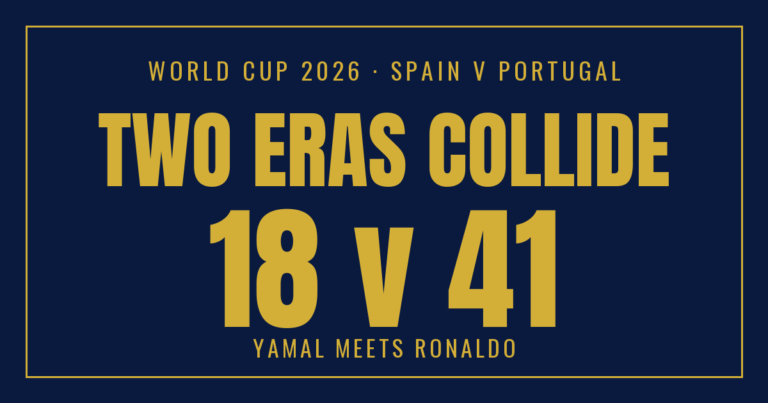
When Spain won the World Cup, Lamine Yamal was not quite three years old. The final in Johannesburg — Andrés Iniesta’s goal, the only one Spain have ever scored in a World Cup final — was played on July 11, 2010. Yamal’s third birthday came two days later. He has spent his entire life, in other words, as a Spaniard who has never been old enough to remember his country as champions of the world.

This summer, the job of changing that falls largely to him.

At 18, Yamal arrives at his first World Cup not as a prospect to be eased in, but as the player a tournament favourite is built around. Spain are the reigning European champions, the team many expect to go deepest of all, and the engine of their attack is a teenager who was the breakout star of Euro 2024 at sixteen — the youngest player ever to appear at a Euros, the youngest ever to score at oneTwo Kopa Trophies as the world’s best under-21, three La Liga titles, and a continental crown later, the World Cup is the one stage he has never stood on. He turns 19 on July 13, six days before the final in New Jersey.

The number he kept

There is a quiet tell in the squad list. At Barcelona this season, Yamal moved from 19 to the number 10 — Lionel Messi’s old shirt, freed up when Ansu Fati’s loan move to Monaco left it vacant. For Spain, he wears 19. Dani Olmo took the national team’s 10 instead.

It is a number with real lineage. Messi wore 19 at Barcelona in his early years, from 2005 to 2008, before he ever graduated to the 10 — and Yamal spent his whole breakthrough in that same 19 before making the identical step up at the club this summer. The two left-footers who work the right flank have been linked since before Yamal could speak: in 2007, the year he was born, a six-month-old Yamal appeared in a UNICEF charity photo shoot cradled beside a young Messi. The boy in that picture now wears Messi’s old club number — and, in red, the one they both wore on the way to it.

A wait that predates him

The burden is real because the gap is real. Spain are European champions, but their World Cup record since 2010 is a study in disappointment — a title defence that collapsed, then years of flattering to deceive on the biggest stage, capped by a round-of-16 exit in Qatar in 2022. For all the talent that has worn the red shirt in the years since Iniesta’s goal, none of it has carried Spain back to a World Cup final.

That is the inheritance Yamal walks into. Not a clean slate, but a sixteen-year ache — nearly as old as he is — that the Euro 2024 triumph soothed without curing. Winning a continent is not winning a world, and Spanish football knows the difference better than most.

The race to the whistle

First, though, he has to be fit. Yamal injured his left hamstring converting a penalty for Barcelona on April 22 and has not played since. He sat out Spain’s warm-up friendly against Iraq, and coach Luis de la Fuente has been careful not to promise too much — saying only that, if nothing changes, his star could be ready for the opener, perhaps for a few minutes, perhaps just to sharpen up for the second match.

That opener comes on June 15 in Atlanta, against debutants Cape Verde, in a Group H that also holds Saudi Arabia and Uruguay. Cape Verde’s qualification is one of the feel-good stories of the expanded field. Spain are heavy favourites to advance, and de la Fuente has insisted he has no doubts the teenager — along with the similarly fitness-troubled Nico Williams — will be ready when it matters. The manager has the luxury of a deep squad to manage Yamal’s minutes early. What he does not have is a like-for-like replacement for what Yamal does when he is on the grass.

The face of a Barcelona Spain

Yamal is also the emblem of the most talked-about selection call de la Fuente made. For the first time in their World Cup history, Spain’s squad contains no Real Madrid players at all — even in 1950, the previous low, the national team still carried one, in Luis Molowny — while Barcelona, the La Liga champions, supply eight, Yamal chief among them. The coach waved away the symbolism, saying he picks national-team players and does not carry a fan’s loyalties to one club or another. But the optics are unmistakable: this is a Spain side spun around the spine of a single club, and the teenager from La Masia is its brightest thread.

It is a lot to hang on someone who cannot yet legally drink in the country he will spend the summer trying to conquer. Then again, Yamal has spent his short career making the improbable look routine — youngest this, youngest that, records that stood for decades falling to a boy who plays as though the pressure is someone else’s problem.

Arrival

A World Cup is the one thing a footballer of his gifts is measured against in the end, and Yamal reaches his first one at an age when most players are still waiting for a debut. Spain have not been world champions since he was a toddler in someone’s arms. Now he is the one being asked to put the star back on the shirt — turning 19 midway through a tournament that will tell us whether the heir is ready, or merely arriving.

He has spent his whole life being too young for things, and doing them anyway. This is the next one.


Sources: Spain’s 26-man squad, the absence of Real Madrid players, and Group H fixtures via ESPN and Al Jazeera (May 2026); Yamal’s hamstring injury and fitness timeline via ESPN and Reuters (June 2026); club No. 10 / Spain No. 19 squad numbers via the official FC Barcelona site and UEFA; Messi’s No. 19 history via Goal. Spain’s 2010 World Cup win and 2022 exit are matters of public sporting record. Yamal’s match fitness remained provisional at the time of publication.

The captain who came home: Alphonso Davies and the World Cup he’s racing to reach

Born in a refugee camp, raised in Canada, now its captain — Alphonso Davies could miss the start of his home World Cup, felled in the very PSG run that just crowned Europe’s champions.

Alphonso Davies has spent his whole life arriving somewhere. Now, with the World Cup arriving in Canada for the first time, the country’s captain is racing to make sure he isn’t the one left at the gate.

Davies tore a hamstring in early May, playing for Bayern Munich in their Champions League semifinal defeat to Paris Saint-Germain. Bayern called it a matter of “several weeks”; reports since have put the recovery closer to four to six. With Canada opening their tournament on June 12 against Bosnia and Herzegovina at BMO Field in Toronto, that timeline runs perilously close to the whistle — and the most recent word from the Canadian camp is that their captain is unlikely to feature in the opener.

Coach Jesse Marsch named him in Canada’s final 26 regardless, a vote of faith that doubles as a gamble: a captain carried partly for what his presence means in the dressing room, even while his minutes on the grass stay uncertain. The injury also set off a quiet tug-of-war, with German outlet BILD reporting the tear ideally needs a six-week rehabilitation even as clubs were obliged to release players for international duty weeks earlier — leaving Bayern and Canada to weigh a nation’s ambitions against a player’s long-term fitness. Canada kept their own message simple: “We’re behind you, Captain,” the national team posted, pledging every resource to get him back.

It would be a cruel ending to a brutal run. Davies has managed just 841 minutes for Bayern this season, his campaign chewed up by injury. To miss the start of a home World Cup after all that would test anyone.

From a refugee camp to Canada’s captain

And few players have travelled as far to reach this moment. Davies was born in a refugee camp in Ghana, to Liberian parents who had fled their country’s civil war. The camp, as he has often described it, gave his family a safe place when they had none. When he was five, a resettlement program brought them to Canada — first to Windsor, Ontario, then to Edmonton.

What followed reads like something invented. He made his senior debut for Canada at 16, the youngest player ever to wear the shirt. He joined Bayern Munich and won the Champions League. In 2021 he became the first footballer ever appointed a Global Goodwill Ambassador by the UN’s refugee agency, telling the world he would never forget where he came from. The boy from the camp had become, in every sense, Canadian — and then Canada’s captain.

There is a strange symmetry to how he got hurt. The PSG side that knocked Bayern out in that semifinal went on to lift the Champions League days later, crowning their own captain, Marquinhos, in Budapest. The same European run that wrote one captain’s triumph may have written another’s heartbreak.

A homecoming Canada is waiting on

Canada arrive at this World Cup as co-hosts alongside the United States and Mexico, chasing the country’s first-ever win at the tournament. Marsch’s squad has weapons without Davies — Jonathan David, Cyle Larin — but it does not have another Davies, the left-back who turns defence into attack in three strides and lifts everyone around him.

Whether he makes the opener, a later group game, or watches from the bench in a tracksuit, the symbolism will not be lost. A World Cup is coming to the country that once took Davies in. He has spent his life arriving. The hope, in Canada, is that he gets to arrive once more — onto the pitch, in front of his own.

Sources: Davies’ injury, recovery timeline and squad status via World Soccer Talk, Sports Illustrated, Daily Hive and Bolavip (May 2026), citing Bayern Munich and BILD; Canada’s fixtures via official 2026 FIFA World Cup schedule; Davies’ biography and UNHCR Goodwill Ambassador role via UNHCR and CBC.

The penalty Marquinhos never forgot — and the record only Beckenbauer holds

Brazil’s captain arrives at the 2026 World Cup chasing a milestone achieved just once in football history — four years after the spot-kick that broke his country’s heart.

Marquinhos has lived both sides of a penalty shootout — and football made him relive them in a single dramatic week.

On May 30 in Budapest, the Paris Saint-Germain captain watched Arsenal’s Gabriel Magalhães balloon the kick that handed PSG a second consecutive Champions League title, a 4–3 shootout win after a 1–1 draw. Then he walked across the turf to console the man who had just lost it. Four years earlier, it had been Marquinhos standing over the ball himself, missing the penalty that sent Brazil crashing out of the 2022 World Cup against Croatia.

Now those threads are about to converge. When the 2026 World Cup kicks off on June 11, Marquinhos will captain Brazil — with Gabriel among his defenders — chasing both a personal redemption and a feat that, in the history of the game, only one man has ever completed.

The record that has waited fifty years

That man is Franz Beckenbauer. In 1974, “Der Kaiser” lifted the European Cup as Bayern Munich’s captain in May, then raised the World Cup as West Germany’s captain that July — the only footballer ever to win Europe’s premier club trophy and the world title as captain of both sides in the same year.

Others have brushed the summit without reaching it. Christian Karembeu won the Champions League with Real Madrid and the World Cup with France across 1997–98; seven members of that great 1974 Bayern team did the continental-and-world double. But none of them wore the armband for club and country. Beckenbauer stands alone.

Having just captained PSG to back-to-back European crowns, Marquinhos could become the second.

The “could” matters. He has won nothing yet at this tournament, and Brazil arrive carrying their own ghosts — a 24-year wait for a sixth star, the longest title drought in their history.

The miss that gives the chase its heart

It is that drought that lends the Beckenbauer pursuit its weight, and the 2022 miss that gives it its heart. In the quarter-final against Croatia in Qatar, with the shootout finely balanced, Marquinhos struck the post. Brazil were out. For a defender who had spent a decade as one of the most composed centre-backs in Europe, it was the cruelest kind of failure in the cruelest kind of moment.

Which is what made Budapest so striking. This time the shootout broke his way — and the man left broken by the final kick was a compatriot, and soon a teammate. The sight of Marquinhos crossing the grass to lift Gabriel said something the scoreline could not: here is a player who knows exactly how that long walk back to the halfway line feels.

A defender, not a galáctico

Brazil’s story is usually told through its attackers, and this squad has them — Vinícius Júnior, Raphinha, Endrick, and a returning Neymar in the No. 10 shirt. But the side Carlo Ancelotti has assembled — the Italian is the first permanent foreign head coach in Brazil’s senior history — leans on the quarterback at the back.

At 32, Marquinhos is its spine: more than 100 caps, an Olympic gold, a Copa América, and now two Champions Leagues. What he offers Brazil is not flair but leadership, the quiet kind that holds a defence together when a tournament tightens.

Whether that is enough to end the drought is the question the next month will answer. But the symmetry is already complete. The player who missed the penalty that defined Brazil’s last World Cup will lead them into the next one, fresh from winning the biggest shootout in club football — chasing a record that has waited half a century for a second name.

Beckenbauer managed it once. Marquinhos has until July to make it twice.


Sources: UEFA Champions League final result and shootout details via CNN, Arsenal FC official match report, and Olympics.com (May 30, 2026); Marquinhos’ 2022 World Cup penalty miss via public match records; Brazil’s 2026 squad and captaincy via the official PSG and Brazil national-team announcements. Historical record of Franz Beckenbauer’s 1974 European Cup and World Cup captaincy is a matter of public sporting history.

Ending the Wait: The 2026 World Cup’s Debutants and Decades-Long Comebacks

When FIFA pushed the World Cup from 32 teams to 48, the headline number was the easy part. The real change is who walks through the door this summer — and how long some of them have been knocking. Four nations will play in their first World Cup. Two more return after a 52-year absence. Put the new arrivals and the long-lost together, and the 2026 tournament in the United States, Canada and Mexico becomes the most open edition football has ever staged.

Here is the full picture in one graphic, followed by what the numbers actually tell us.

Chart of 2026 World Cup debutant nations and the years since each returning team last appeared
The four 2026 debutants, and the returning nations ranked by years since their last World Cup appearance. Source: FIFA, ESPN, Britannica.

The first-timers: four nations, four very different stories

Cape Verde, Curaçao, Jordan and Uzbekistan will each step onto the World Cup stage for the first time. What stands out is how little they have in common beyond the milestone.

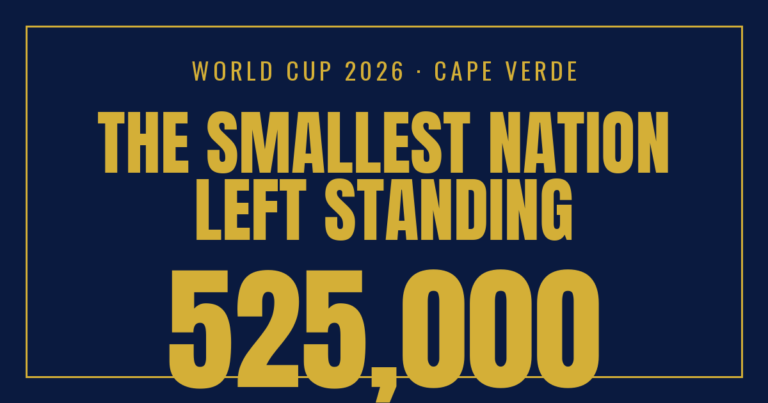
Curaçao is the headline. A Caribbean island of roughly 150,000 people, it becomes the smallest nation by population ever to reach a World Cup — a squad built largely on players developed in the Netherlands, the model emerging football countries increasingly lean on. Cape Verde is not far behind: an archipelago of about 525,000 off the West African coast, the third-smallest nation ever to qualify, who topped a tough African group that included Cameroon.

The two Asian debutants tell a story about a confederation on the rise. Uzbekistan becomes the first Central Asian country to reach a men’s World Cup after years of near-misses, while Jordan sealed its maiden berth with an emphatic qualifying win over Oman. Neither is a fairytale minnow in the Curaçao sense; both are programs that have been building toward this for a decade.

One honest caveat, and it matters for anyone claiming this is a record-breaking influx: four debutants is a strong number, but it is not a record. Six nations debuted at the 2006 World Cup. The expansion lowered the bar to entry, yet the truly unprecedented part of 2026 is not the debuts — it is the comebacks.

The comebacks: where the real history lives

Sort the returning teams by how long they have been away and the emotional core of this tournament comes into focus.

At the top sit Haiti and DR Congo, both back for the first time since 1974 — a 52-year wait, the longest of any qualified nation. Their only previous appearances came at the same tournament in West Germany, when DR Congo competed as Zaire. Haiti’s road was extraordinary even by qualifying standards: with unrest at home, the team played its “home” matches more than 1,000 kilometres away, and a French head coach guided them through without being able to set foot in the country he represents.

Iraq comes next, ending a 40-year absence that stretches back to its sole appearance in 1986, sealed with a tense intercontinental playoff win over Bolivia. Then a cluster of European heavyweights who have spent a generation watching from home: NorwayScotland and Austria all return for the first time since 1998 — 28 years. Norway’s wait ended on the back of a prolific qualifying campaign from a forward line the rest of the field would rather not face; Scotland’s came via the kind of late drama that defines the nation’s relationship with the tournament.

Rounding out the ladder are Türkiye, back after 24 years (and memories of a third-place finish in 2002), Czechia after a 20-year gap, and Paraguay and South Africa, each returning after 16 years away.

Why now: the mechanics behind the romance

It would be easy to file all of this under feel-good underdog storytelling. The more useful question is structural: why did the door open this wide, this year?

The answer is the expansion itself, distributed through the confederations. Adding 16 places to the field meant every region received more World Cup berths, and the largest share of new opportunity flowed to Africa and Asia — exactly where most of 2026’s debutants and long-wait returnees come from. A nation like Cape Verde or Uzbekistan, good enough to contend but historically squeezed out by a handful of continental slots, suddenly had a realistic path. The expanded format did not manufacture these teams; their golden generations and improving systems are real. What it did was remove the bottleneck that kept them out.

That framing also explains the flip side that has dominated headlines elsewhere: with more places available, the shock is not only who got in but who did not. Italy’s continued absence is the starkest reminder that a bigger field rewards the nations on the way up and punishes the established powers who stumble.

What it means for the tournament

For the neutral, this is the promise of 2026 in a sentence: more first chapters and more long-awaited sequels than any World Cup before it. Curaçao opening against Germany, Jordan drawn alongside the reigning champions, Haiti and DR Congo back on the stage after half a century — these are the matches that turn a tournament into a story.

Whether any of these sides survive the group stage is a separate question, and the rankings suggest most will find the step up severe. But qualification was never going to be the end of the journey for these nations; it was the part that seemed impossible. The 48-team era’s first verdict is already in. The door is open wider than it has ever been — and football’s forgotten countries walked straight through it.


About the Author

Manoel Vasudevan is the founder and editor of Billion Dollar Sport, which he launched to cover the 2026 FIFA World Cup. He grew up playing football for a local club in Chennai and has followed the game closely ever since. He approaches the site as a dedicated fan rather than a former professional — leaning on careful research, primary sources, and modern tools (including AI for drafting and data work), with every piece fact-checked and edited by hand before it goes live. Spotted an error? Corrections are welcome and made promptly.


Researched and written with the assistance of AI tools and edited by Manoel Vasudevan. Figures verified against FIFA, ESPN and Encyclopaedia Britannica as of publication. Several squads remain provisional ahead of the June final-list deadline.

Neymar Makes Stunning Return as Brazil Name 2026 World Cup Squad

Neymar da Silva Santos Júnior has been named in Brazil's squad for the 2026 FIFA World Cup, ending months of uncertainty surrounding the fitness and international future of one of football's most iconic players.

The 34-year-old's inclusion in the Seleção's squad for the tournament — hosted across the United States, Canada, and Mexico — was confirmed on May 19, 2026, sending shockwaves through the football world and reigniting excitement among Brazilian fans ahead of the biggest tournament on the planet.

THE COMEBACK KID

Neymar's road back to the World Cup has been nothing short of extraordinary. After suffering a serious knee injury that kept him sidelined for over a year, many had written off the former Barcelona and Paris Saint-Germain forward. His inclusion in the squad signals his full recovery and his burning desire to finally win the one trophy that has eluded him — the FIFA World Cup.

Brazil last won the World Cup in 2002, and the nation has been hungry for glory ever since. With Neymar back in the fold, hopes are high that the five-time world champions can go all the way in 2026.

WORLD CUP 2026 — THE BIG PICTURE

The 2026 FIFA World Cup is the largest in history, featuring 48 teams competing across 16 host cities — 11 in the United States, three in Mexico, and two in Canada. The expanded format gives more nations than ever before a chance to compete on the world's biggest stage.

Brazil are among the tournament favourites alongside Argentina, France, England, and Spain. With Neymar fit and firing, the South American giants will be a dangerous proposition for any opponent.

THE STAKES

For Neymar, this is likely his final World Cup. At 34 years old and with his injury history, the 2026 tournament represents his last realistic chance to lift the trophy that would cement his legacy as one of the greatest players of his generation.

Brazil's opening group stage fixtures are expected to draw massive global audiences, with Neymar's return guaranteeing that the Seleção will be one of the most-watched teams throughout the tournament.

The FIFA World Cup 2026 kicks off in June 2026 across North America. Stay tuned to Billion Dollar Sport for complete coverage, match reports, player profiles, and the very latest from the tournament.